Kyoto Beyond the Crowds: Zen Gardens & The Quiet Craft of Tea
Discovering quiet temple sanctuaries and generational tea masters hidden behind wooden lattice screens in the ancient capital.
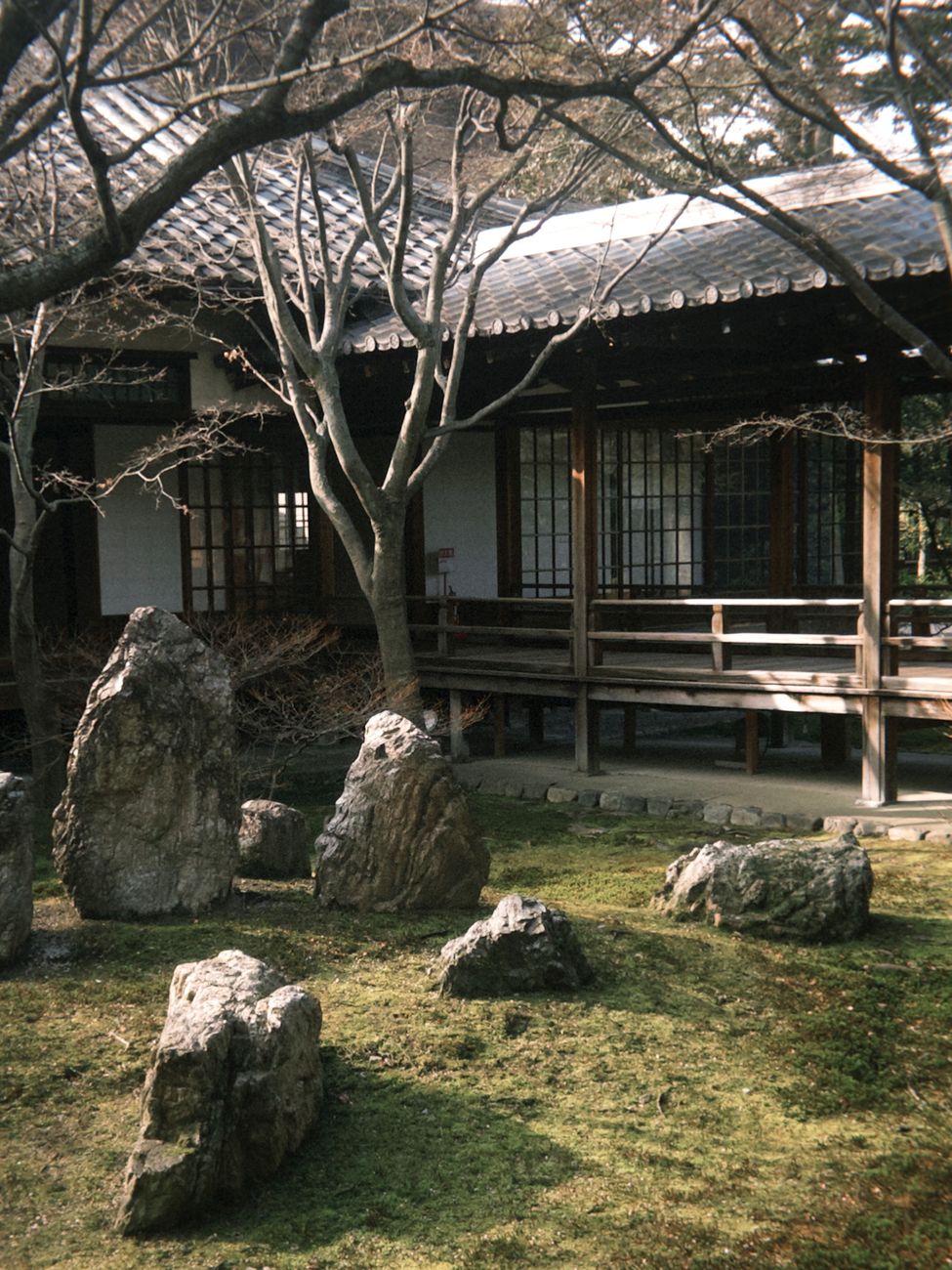
Table of Contents
While midday tour coaches jam the approaches to Kinkaku-ji and the vermilion corridors of Fushimi Inari, an older, deeply quiet Kyoto endures just two streets away. It is an architecture of cedar wood, sliding shoji screens, wet river stones, and careful modesty.
The Shadowed Geometry of the Machiya
Walking through the narrow alleys of Kamigyo-ku in early morning reveals the texture of genuine residential Kyoto. Here, traditional machiya townhouses preserve cedar facades and bamboo blinds. Inside, small inner courtyards—known as tsuboniwa—capture shafts of daylight, illuminating damp moss gardens and carved stone water basins with painterly precision.
These residential micro-gardens remind the visitor that in Japanese architectural philosophy, the boundary between interior sanctuary and nature is delicate, porous, and deliberate.
Reading Dry Landscapes (Karesansui)
At sub-temples in Daitoku-ji that escape standard guidebooks, gravel raked in undulating waves represents the endless ocean, while moss-capped boulders symbolize islands of permanence. To sit upon the polished veranda of an austere hall without tour loudspeakers is to engage with meditation in its purest spatial form.
"Simplicity is not a lack of detail; it is the ultimate resolution of what is necessary."
The Meditative Cadence of Chado
In a private tearoom tucked near the foothills of Uji, sixteenth-generation tea craft continues without theatrical spectacle. Water boiling softly in an iron kettle mimics wind through bamboo. Each gesture—wiping the lacquer caddy, whisking jade matcha into vibrant foam—is practiced with total presence. It is a subtle masterclass in honoring the guest through presence rather than ostentation.